Title:
Quantifying Toxin Gene Abundance in a Harmful Algal Bloom Species Along the New Hampshire Coast
Poster
Preview Converted Images may contain errors
Abstract
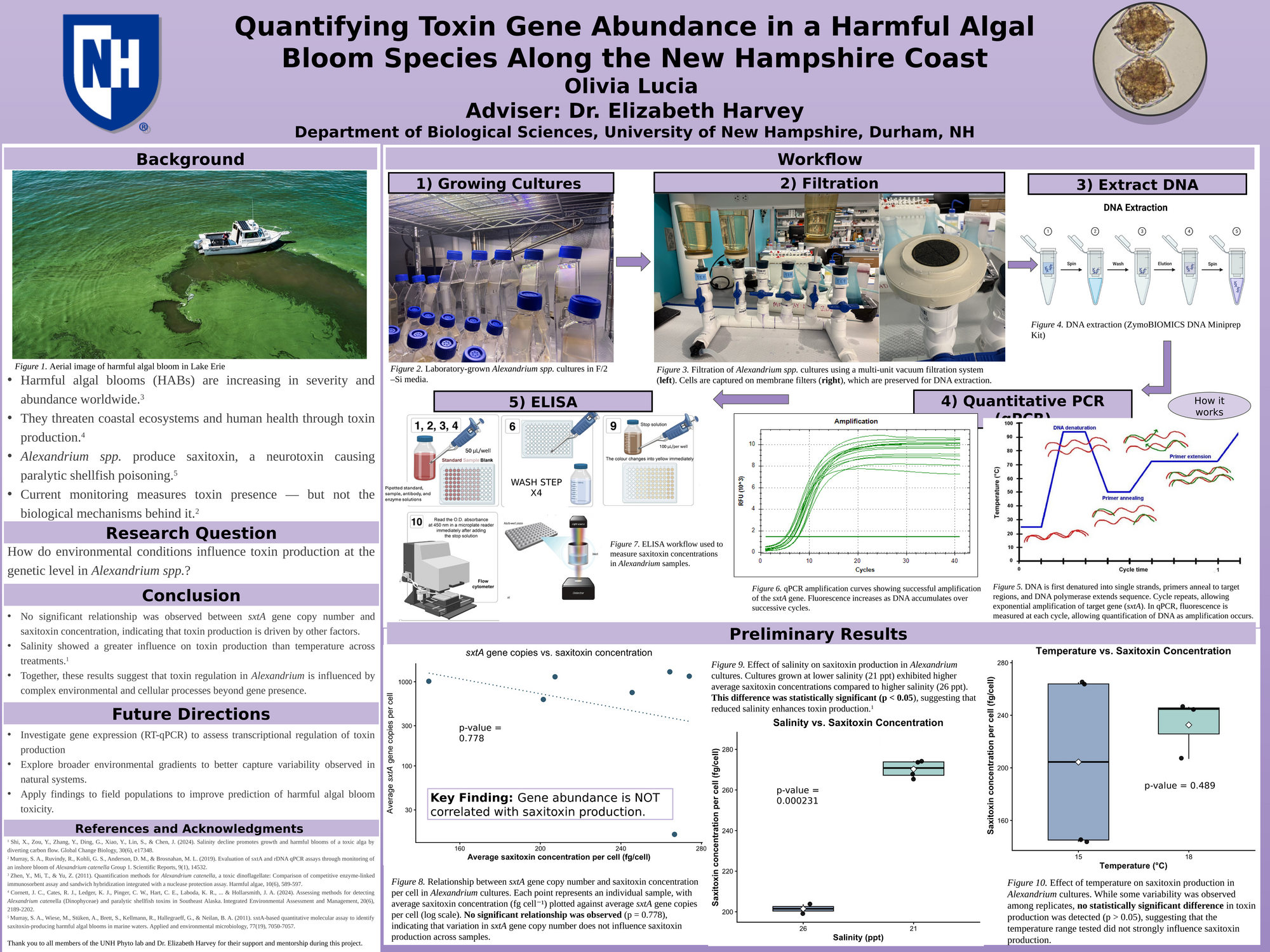
Harmful algal blooms (HABs) caused by dinoflagellates in the genus Alexandrium are a growing environmental and public health concern as they produce saxitoxin, a potent neurotoxin responsible for paralytic shellfish poisoning (PSP). While environmental conditions are known to influence the formation of these blooms, the molecular mechanisms regulating toxin production remain poorly understood. This project investigates how environmental factors influence saxitoxin biosynthesis by quantifying the abundance of the sxtA gene, a key component of the
saxitoxin biosynthetic pathway. Laboratory monocultures of Alexandrium spp. were grown under controlled environmental conditions, including experimentally manipulated temperature and salinity treatments. Cells were filtered and preserved for DNA extraction using the ZymoBIOMICS DNA Miniprep Kit. The presence of the sxtA gene was first screened using PCR and gel electrophoresis before quantification via quantitative polymerase chain reaction (qPCR) using SYBR Green chemistry. A synthetic gene block was used to establish a standard curve for quantification. Parallel samples
were analyzed using enzyme-linked immunosorbent assays (ELISA) to measure saxitoxin concentrations. Preliminary results indicate that toxin production varies across environmental conditions. Cultures grown under Spaulding laboratory temperature conditions showed the highest relative
toxin concentrations, while cultures grown under Rudman laboratory conditions produced lower toxin levels. Moderate toxin production was observed under full-strength salinity conditions. These findings suggest that environmental factors influence both toxin production and gene
abundance. By linking molecular measurements of toxin biosynthesis genes with environmental conditions, this research contributes to a deeper understanding of harmful algal bloom physiology. Improved knowledge of the environmental drivers of saxitoxin production may ultimately enhance early
detection and monitoring strategies for HABs and improve prediction of toxic bloom events in coastal ecosystems.
Authors
| First Name |
Last Name |
|
Olivia
|
Lucia
|
Advisors:
| Full Name |
|
Elizabeth Harvey
|
Leave a comment
Submission Details
Conference URC
Event Interdisciplinary Science and Engineering (ISE)
Department Biology (ISE)
Group Biology
Added April 14, 2026, 1:04 p.m.
Updated April 14, 2026, 1:05 p.m.
See More Department Presentations Here