Title:
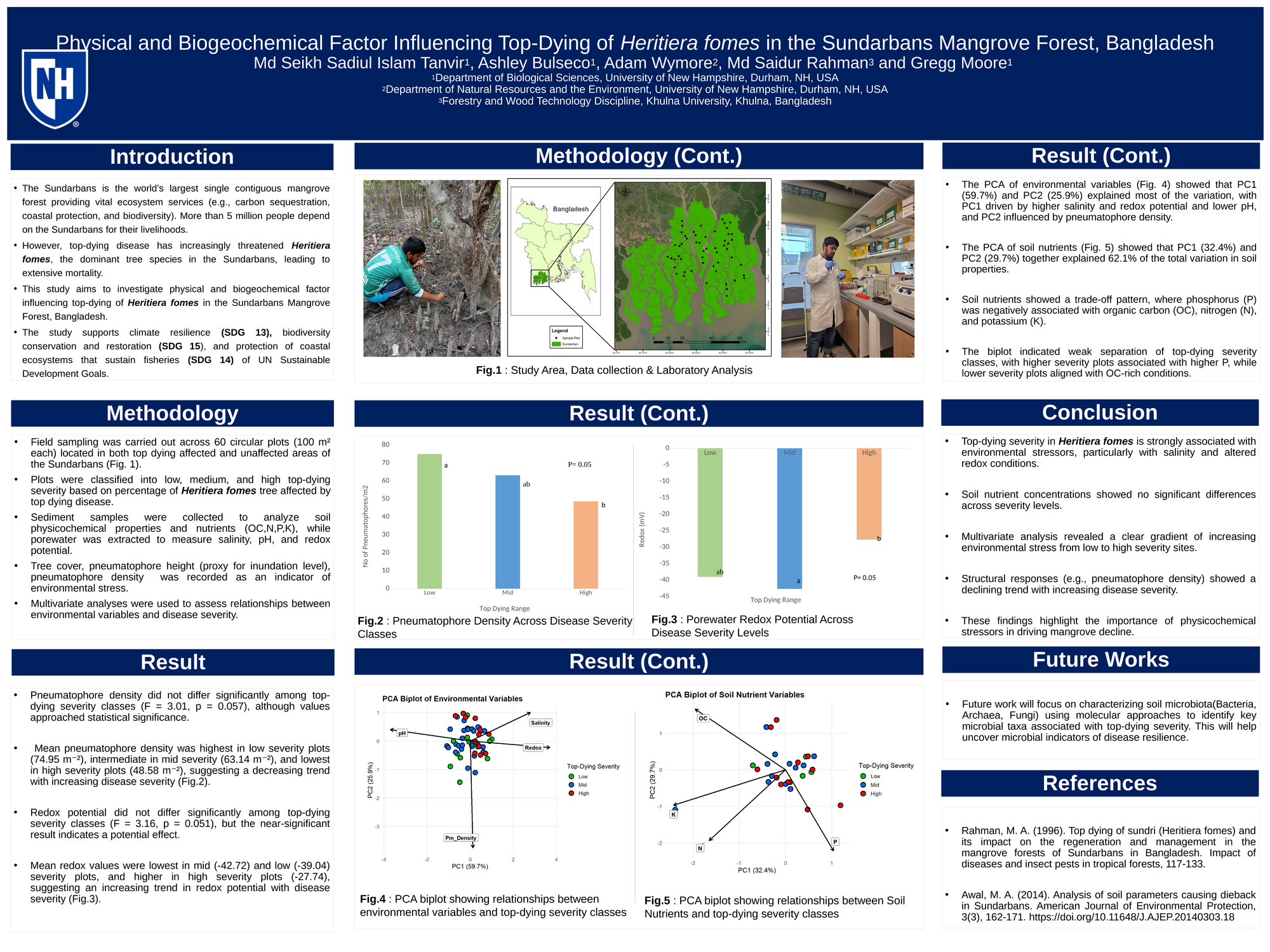
Physical and Biogeochemical Factor Influencing Top-Dying of Heritiera fomes in the Sundarbans Mangrove Forest, Bangladesh
Poster
Preview Converted Images may contain errors
Abstract
The Sundarbans is the world’s largest single contiguous mangrove forest, providing vital ecosystem services (e.g., carbon sequestration, coastal protection, and biodiversity). More than 5 million people depend on the Sundarbans for their livelihoods. However, top-dying disease has increasingly threatened Heritiera fomes mangrove, the dominant tree species in the Sundarbans, leading to extensive mortality. This study aims to investigate sediment and porewater chemistry in three different severities of top-dying: high, medium, and low. We have collected sediment, pore water and other environmental variables from 60 randomly distributed sample plots. Multivariate analyses of environmental stress factors indicated that elevated salinity, reduced redox potential, and increased pneumatophore height were the primary drivers differentiating high top-dying severity sites compared to low and mid-severity areas. In contrast, soil nutrients revealed no significant differences or distinct clustering among the severity levels.
Authors
| First Name |
Last Name |
|
Gregg
|
Moore
|
|
Md Saidur
|
Rahman
|
|
Adam
|
Wymore
|
|
Ashley
|
Bulseco
|
|
Md Seikh Sadiul Islam
|
Tanvir
|
Leave a comment
Submission Details
Conference GRC
Event Graduate Research Conference
Department DBS (GRC)
Group Strengthening UNH's Impact Through Sustainability
Added April 10, 2026, 4:48 p.m.
Updated April 10, 2026, 4:49 p.m.
See More Department Presentations Here