Title:
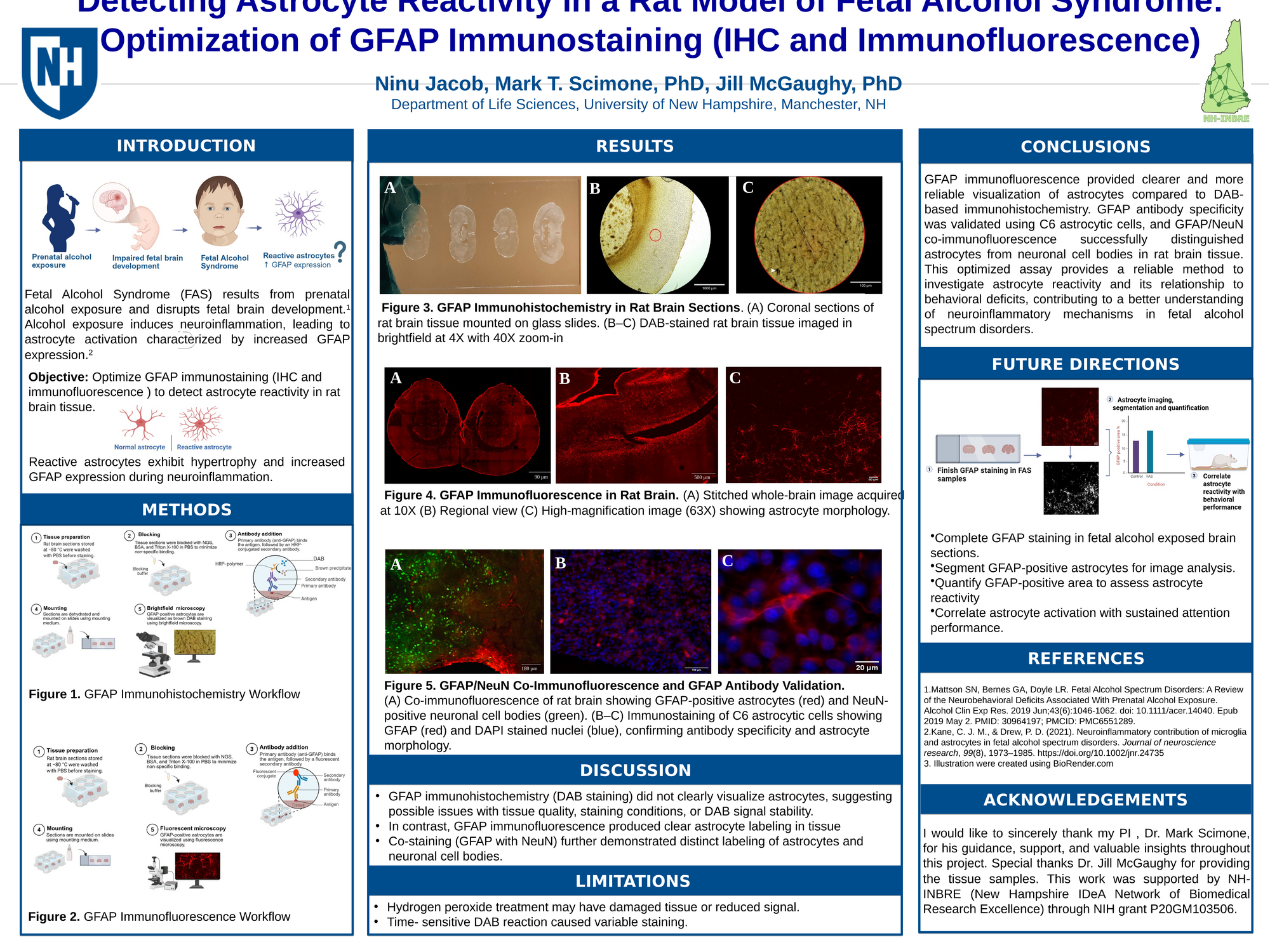
Detecting Astrocyte Reactivity in a Rat Model of Fetal Alcohol Syndrome:Optimization of GFAP Immunostaining (IHC and Immunofluorescence)
Poster
Preview Converted Images may contain errors
Abstract
Fetal Alcohol Syndrome (FAS), caused by prenatal alcohol exposure, leads to long-term neurodevelopmental impairments and cognitive deficits. Astrocyte activation and neuroinflammation may contribute to these brain alterations. This study aimed to optimize glial fibrillary acidic protein (GFAP) immunostaining methods to detect astrocyte reactivity in rat brain tissue. Both immunohistochemistry (IHC) and immunofluorescence (IF) approaches were evaluated. While GFAP IHC produced inconsistent astrocyte visualization, immunofluorescence provided clearer and more reliable labeling of astrocyte morphology. Co-immunofluorescence with NeuN further confirmed distinct labeling of astrocytes and neuronal cell bodies. These results support immunofluorescence as a robust method for studying astrocyte reactivity and neuroinflammatory changes associated with fetal alcohol exposure.
Authors
| First Name |
Last Name |
|
Jill
|
McGaughy
|
|
Mark
|
Scimone
|
|
Ninu
|
Jacob
|
Leave a comment
Submission Details
Conference GRC
Event Graduate Research Conference
Department Life Sciences (GRC)
Group Teaching Excellence and Scholarship
Added April 8, 2026, 10:10 p.m.
Updated April 14, 2026, 12:40 p.m.
See More Department Presentations Here